History and trivia
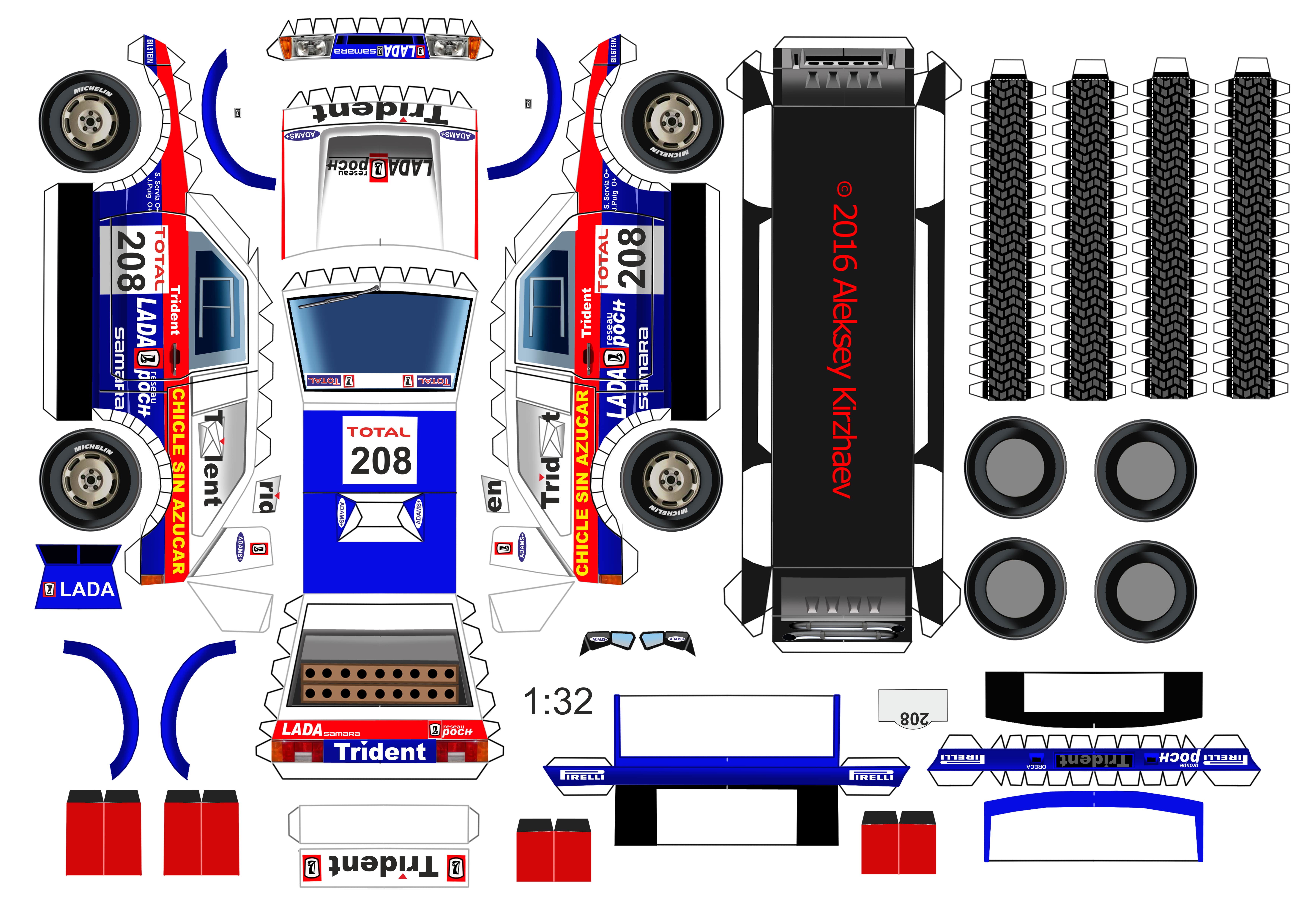
The Lada Poisk project began in the Soviet Union in the late 1980s with the goal of getting AvtoVAZ, the maker of Lada, onto the Dakar Rally, then the world's leading off-road endurance event. Although the Samara T3 borrowed its name from the road-going Lada Samara, the resemblance was mostly cosmetic: underneath the bodywork sat a purpose-built tubular competition chassis, mechanically far removed from the production hatchback, in line with the "T3" lightweight off-road prototype class defined by the era's regulations.
The program represented a significant effort for Soviet industry, which, in the final years of the USSR and the transition that followed, was looking to prove its technical capability on an international stage dominated by Western manufacturers such as Peugeot, Mitsubishi and Citroën. Competing at the Dakar with an in-house-developed vehicle, working with far fewer logistical and budgetary resources than the major European factory teams, turned the Samara T3 into a symbol of both the ambition and the constraints of the Soviet motor industry in its final years.